Power vs. Distribution Transformers: Key Differences Explained
Power vs. Distribution Transformers: Key Differences Explained
Understanding the Core Differences: Power Transformers vs. Distribution Transformers
In the intricate world of electrical power systems, transformers are indispensable components. They are the unsung heroes that enable the efficient and safe transmission and distribution of electricity from power plants to our homes and businesses. While all transformers perform the fundamental function of changing voltage levels, not all are created equal. Two broad categories dominate the landscape: power transformers and distribution transformers. Although they share a common purpose, their design, application, and operational characteristics are distinctly different. For businesses involved in electrical infrastructure, understanding these distinctions is crucial for selecting the right equipment, ensuring system reliability, and optimizing operational efficiency. This article delves into the core differences between power transformers and distribution transformers, exploring their roles, specifications, and the standards that govern their design, including IEC 60076, KEPCO, and IEEE C57.
What is a Power Transformer?
Power transformers are the heavyweights of the transformer world. They are designed to operate at extremely high voltages and handle massive amounts of power, typically in the range of hundreds of megavolt-amperes (MVA). Their primary role is within the transmission and generation stages of the power grid. They are responsible for stepping up the voltage from generators to very high levels (e.g., 132 kV, 230 kV, 400 kV, 765 kV) for efficient long-distance transmission with minimal power loss. At substations, they then step down these high transmission voltages to lower, intermediate voltage levels suitable for further distribution.
Key Characteristics of Power Transformers:
- High Voltage & Power Rating: Designed for voltages above 33 kV and power ratings typically exceeding 10 MVA, often reaching hundreds of MVA.
- Location in the Grid: Primarily found in power generation plants and high-voltage transmission substations.
- Efficiency Focus: Optimized for maximum efficiency at near full load, as they are generally continuously loaded.
- Size & Weight: Significantly larger and heavier than distribution transformers due to their capacity and robust construction.
- Cooling Systems: Employ sophisticated cooling systems like ONAN (Oil Natural Air Natural), ONAF (Oil Natural Air Forced), OFAF (Oil Forced Air Forced), and water cooling for effective heat dissipation.
- Load Fluctuation: Experience relatively stable load conditions, operating close to their rated capacity for extended periods.
- Regulation Requirements: Tend to have tighter voltage regulation requirements due to the critical nature of transmission networks.
Standards Governing Power Transformers:
Power transformers are built to stringent international and national standards to ensure safety, reliability, and interoperability. Key standards include:
- IEC 60076: This is the internationally recognized standard for power transformers, covering a wide range of aspects including design, testing, and performance.
- IEEE C57 Standards: Particularly IEEE C57.12.00 and related standards, which are widely adopted in North America and other regions, specifying requirements for power transformers.
- KEPCO Standards: Korea Electric Power Corporation (KEPCO) has its own set of technical standards that suppliers must adhere to when supplying transformers for projects within South Korea. These often align with or build upon international standards.
What is a Distribution Transformer?
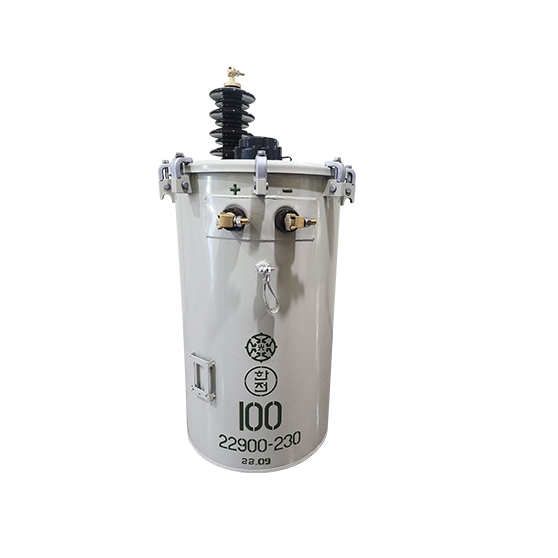
Distribution transformers are the workhorses that bring electricity from the lower voltage side of substations right to the doorstep of consumers. They operate at lower voltages and are designed to step down the voltage from distribution lines (e.g., 11 kV, 22 kV, 33 kV) to the utilization voltage required by homes (e.g., 240/120V in North America, 400/230V in Europe) and businesses. They are the most visible type of transformer, often seen on utility poles or in pad-mounted enclosures in neighborhoods.
Key Characteristics of Distribution Transformers:
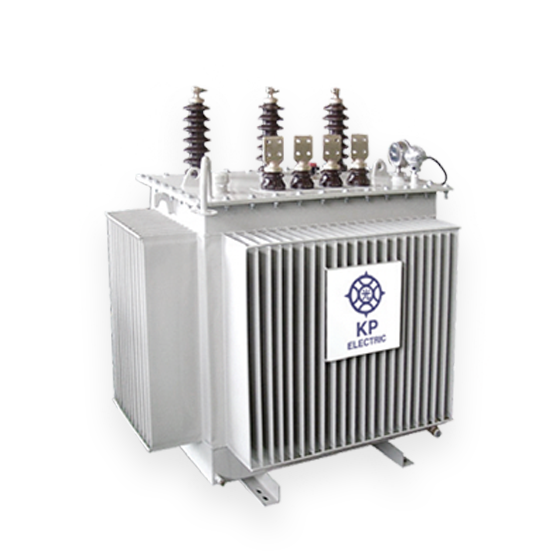
- Lower Voltage & Power Rating: Operate at lower voltages (typically below 33 kV) and have power ratings ranging from a few kVA up to several MVA, but generally much smaller than power transformers.
- Location in the Grid: Installed at distribution substations and along the distribution network, closer to the end-users.
- Efficiency Focus: Designed for high efficiency under varying load conditions, as they often experience significant fluctuations throughout the day. Core losses are minimized to ensure efficiency even at light loads.
- Size & Weight: Compact and lightweight compared to power transformers, facilitating easier installation on poles or in confined spaces.
- Cooling Systems: Primarily use simpler cooling methods like ONAN (Oil Natural Air Natural) due to lower power ratings and less stringent cooling needs.
- Load Fluctuation: Experience significant load variations, often operating at lower loads for extended periods.
- Regulation Requirements: Voltage regulation is important, but the tolerance may be slightly wider than for power transformers, depending on the specific application.
Standards Governing Distribution Transformers:
Similar to power transformers, distribution transformers must comply with relevant standards:
- IEC 60076 Series: Parts of this series also apply to distribution transformers.
- IEEE C57 Standards: Specifically standards like IEEE C57.12.20 for overhead-type distribution transformers and IEEE C57.12.31 for pad-mounted transformers.
- KEPCO Standards: KEPCO also sets specific requirements for distribution transformers used within its network.
Direct Comparison: Power vs. Distribution Transformers
To further clarify the distinctions, let's summarize the key differences in a comparative format:
| Feature Power Transformer Distribution Transformer | ||
| Primary Function | Voltage step-up/step-down in transmission networks; bulk power transfer. | Voltage step-down to final utilization levels for end-users. |
| Voltage Level | Very High (e.g., 132 kV, 230 kV, 400 kV, 765 kV) | Medium to Low (e.g., 11 kV, 33 kV down to 240/120 V or 400/230 V) |
| Power Rating | High (10 MVA to hundreds of MVA) | Lower (few kVA to several MVA) |
| Operating Location | Generation plants, transmission substations. | Distribution substations, utility poles, pad-mounts, industrial sites. |
| Efficiency Optimization | At or near full load (continuous operation). | Across a range of loads, optimized for light load efficiency (lower core loss). |
| Load Pattern | Relatively stable, high utilization. | Highly variable, often fluctuating significantly. |
| Size & Weight | Very large and heavy. | Relatively small and light. |
| Cooling Method | Complex (OFAF, OFWF, etc.). | Simpler (ONAN). |
| Cost | Significantly higher per unit. | Lower per unit, but more numerous. |
| Governing Standards | IEC 60076, IEEE C57, KEPCO. | IEC 60076, IEEE C57, KEPCO. |
Why These Differences Matter for Your Business
For manufacturers, engineering firms, utility companies, and project developers involved in electrical infrastructure projects, understanding the nuances between power and distribution transformers is not just academic; it's fundamental to successful project execution. Choosing the wrong type of transformer can lead to:
- System Inefficiency: Using a power transformer for distribution tasks can be overly expensive and inefficient. Conversely, a distribution transformer is incapable of handling the demands of transmission.
- Premature Failure: Operating a transformer outside its designed parameters (e.g., overloading a distribution transformer or running a power transformer at very low loads consistently) can lead to overheating, insulation breakdown, and premature failure.
- Cost Overruns: Specifying unnecessarily high-rated or complex transformers increases initial capital expenditure.
- Safety Hazards: Improper selection can compromise the safety and reliability of the entire electrical grid.
When sourcing transformers, particularly for international projects, it's vital to consider the applicable standards. Compliance with IEC 60076 ensures global compatibility, while adherence to specific national standards like those from KEPCO or IEEE C57 guarantees suitability for regional grid requirements and regulations. Manufacturers specializing in high-quality transformers, adhering to these rigorous standards, offer reliable solutions for diverse power system needs.
Conclusion
In essence, power transformers are built for the high-voltage, high-power demands of bulk energy transfer across long distances, operating in the core of the transmission network. Distribution transformers, on the other hand, are designed for the final voltage reduction, efficiently and reliably delivering electricity to end consumers at usable voltage levels. While both are critical links in the power delivery chain, their distinct roles necessitate different design philosophies, specifications, and operational considerations. By understanding these fundamental differences and the standards that govern them, stakeholders can make informed decisions, ensuring the robustness, efficiency, and safety of electrical power systems worldwide. Companies seeking reliable transformer solutions, whether for transmission or distribution applications, should partner with manufacturers who demonstrate expertise in adhering to international benchmarks like IEC 60076 and regional standards like KEPCO and IEEE C57, ensuring optimal performance and longevity.
Recommended Products
Discover related products from our store
Read Next
Continue reading related articles curated for you.

Transformer Vector Group Explained: A Buyer's Guide
Demystify transformer vector groups! Learn what they are, how to read notation (like Dyn11), and why they're crucial for international buyers ensuring grid compatibility & safety.
Read
Inside a Transformer: Key Components & How They Work Together
Explore the critical components inside a power transformer, from the core to cooling systems, and discover how they synergize to ensure reliable, efficient power delivery. Learn about adherence to IEC 60076 and IEEE C57 standards for global markets.
Read
Transformer Efficiency: Cutting Losses for a Greener Grid
Discover why transformer efficiency is vital for power grids, exploring losses, heat, and the future of sustainable energy distribution.
Read