Importing Korean Transformers: A Buyer's Checklist
Importing Korean Transformers: A Buyer's Checklist
Navigating the Import of Korean Power Transformers: A Comprehensive Buyer's Guide
South Korea has established itself as a global leader in the manufacturing of high-quality power transformers. Renowned for their technological prowess, stringent quality control, and adherence to international standards, Korean manufacturers are a preferred choice for many international buyers. However, importing such critical electrical infrastructure requires meticulous planning and due diligence. This guide provides international buyers with an essential checklist to ensure a smooth and successful acquisition of Korean power transformers, focusing on compliance with IEC 60076, KEPCO, and IEEE C57 standards.
1. Understanding Your Project Requirements and Specifications
Before engaging with any supplier, a thorough understanding of your specific needs is paramount. This includes:
- Power Rating (kVA/MVA): Clearly define the required power capacity.
- Voltage Levels: Specify primary and secondary voltage ratings, including any tap changer requirements (e.g., ±2.5%, ±5%).
- Frequency: Standard is 50Hz or 60Hz.
- Cooling Method: ONAN, ONAF, OFAF, etc., depending on ambient conditions and load requirements.
- Environmental Conditions: Temperature range, altitude, humidity, seismic activity, and pollution levels at the installation site.
- Impedance (%): Crucial for fault current calculations and system stability.
- Vector Group: Essential for parallel operation and phase relationships.
- Number of Phases: Typically single or three-phase.
- Application: Substations, industrial facilities, renewable energy projects, etc.
2. Verifying Compliance with International Standards
Korean transformer manufacturers typically adhere to globally recognized standards. Ensure the manufacturer explicitly states compliance with the standards relevant to your region and application:
- IEC 60076: The most widely adopted international standard for power transformers, covering design, testing, and performance. Verify which parts of the IEC 60076 series are applicable (e.g., Part 1 for general, Part 2 for temperature rise, Part 3 for insulation levels).
- IEEE C57: Widely used in North America, these standards (e.g., IEEE C57.12.00, IEEE C57.91) cover similar aspects to IEC but may have specific nuances. If your project is in a region that uses IEEE standards, ensure compliance.
- KEPCO Standards: Korea Electric Power Corporation (KEPCO) has its own stringent technical specifications for transformers used in its grid. If you are importing for a project connected to or influenced by KEPCO's infrastructure, or if KEPCO's standards are specified, ensure the manufacturer can meet these requirements. This often involves more rigorous testing and specific design features.
- Other Regional Standards: Depending on your location, other national or regional standards might apply (e.g., BS, AS).
3. Evaluating Manufacturer Credentials and Experience
Beyond compliance, assess the manufacturer's overall capability:
- Track Record: Request references for similar projects, especially those involving international buyers and the specific standards you require.
- Certifications: Look for ISO 9001 (Quality Management), ISO 14001 (Environmental Management), and OHSAS 18001/ISO 45001 (Occupational Health and Safety).
- Factory Visit: If feasible, a pre-shipment factory inspection is highly recommended. This allows you to witness manufacturing processes, quality control measures, and testing facilities firsthand.
- Technical Expertise: Assess the engineering team's capabilities in design, customization, and problem-solving.
4. Scrutinizing Quality Control and Testing Procedures
A robust Quality Assurance (QA) and Quality Control (QC) system is non-negotiable:
- Type Tests: These are performed on one transformer of a given design to prove its capabilities. Ensure the manufacturer provides certified results for type tests as per the specified standards (e.g., impulse withstand, short-circuit withstand, dielectric tests).
- Routine Tests: Performed on every transformer produced (e.g., winding resistance, turns ratio, polarity, no-load loss, load loss). Verify that these are conducted and documented.
- Acceptance Tests: These are tests performed by the manufacturer in the presence of the purchaser or their representative, or the results of which are confirmed by the purchaser, to verify the characteristics of a specific transformer. Clarify which acceptance tests will be performed and whether your representative can attend.
- Third-Party Inspection: Consider engaging an independent inspection agency (e.g., KEMA, CESI, TUV) to witness critical tests and perform inspections.
5. Examining Transformer Design and Materials
The quality of materials and the robustness of the design directly impact the transformer's lifespan and reliability:
- Core Material: High-grade silicon steel (e.g., CRGO - Cold Rolled Grain Oriented) for low losses.
- Winding Material: Copper or aluminum, depending on specifications and cost-effectiveness.
- Insulation Materials: High-quality pressboard, insulating paper, and transformer oil meeting relevant standards.
- Bushings: Verify type (porcelain, epoxy resin composite) and insulation level.
- Tap Changer: Specify whether it’s on-load tap changer (OLTC) or off-load tap changer (DSPT), and the number of steps/taps.
- Cooling System: Ensure the design is adequate for the expected ambient temperatures and load profiles.
6. Logistics, Shipping, and Packaging
International shipping of transformers requires careful planning:
- Packaging: Transformers must be robustly packaged to withstand the rigors of international transport. This often involves wooden crating, anti-corrosion treatment, and securing measures.
- Shipping Method: Determine the most suitable method (sea freight, air freight) based on urgency and cost. Specialized heavy-lift vessels or containers may be required.
- Incoterms: Clearly define responsibilities for shipping, insurance, customs clearance, and delivery using agreed Incoterms (e.g., FOB, CIF, DDP).
- Insurance: Ensure adequate marine cargo insurance is in place to cover potential damage during transit.
- Customs Documentation: Work with the supplier and your customs broker to ensure all necessary documentation (e.g., certificate of origin, commercial invoice, packing list, bill of lading) is accurate and complete.
7. After-Sales Support and Warranty
A robust warranty and reliable after-sales service are crucial for long-term operational success:
- Warranty Period: Typically 12-24 months from commissioning or 18-36 months from shipment. Clarify the terms and conditions.
- Technical Support: Ensure the manufacturer can provide prompt technical assistance for installation, commissioning, and troubleshooting.
- Spare Parts: Understand the availability and lead time for critical spare parts.
- Training: Inquire about training programs for your maintenance personnel, if required.
Conclusion
Importing Korean power transformers, especially those adhering to stringent standards like IEC 60076, KEPCO, and IEEE C57, offers access to world-class technology and reliability. By meticulously following this checklist – from defining precise technical requirements and verifying international standard compliance to assessing manufacturer credibility and planning logistics – international buyers can mitigate risks, ensure product quality, and secure a long-lasting, efficient power infrastructure solution. Partnering with reputable Korean manufacturers, backed by thorough due diligence, paves the way for successful project outcomes.
Recommended Products
Discover related products from our store
Read Next
Continue reading related articles curated for you.

Transformer Vector Group Explained: A Buyer's Guide
Demystify transformer vector groups! Learn what they are, how to read notation (like Dyn11), and why they're crucial for international buyers ensuring grid compatibility & safety.
Read
Power vs. Distribution Transformers: Key Differences Explained
Explore the critical differences between power and distribution transformers, their roles in the electrical grid, key specifications, and governing standards like IEC 60076.
Read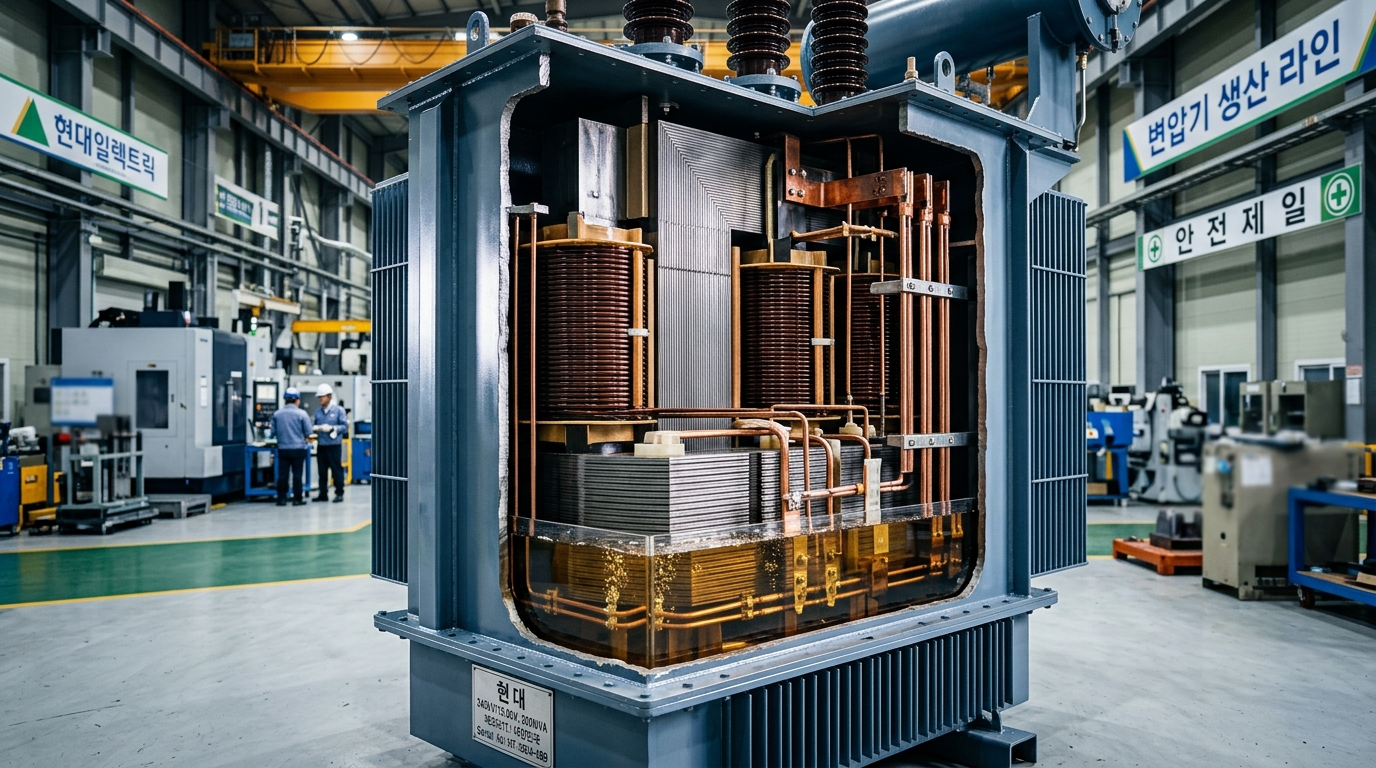
Inside a Transformer: Key Components & How They Work Together
Explore the critical components inside a power transformer, from the core to cooling systems, and discover how they synergize to ensure reliable, efficient power delivery. Learn about adherence to IEC 60076 and IEEE C57 standards for global markets.
Read