How Transformers Work: The Science of Voltage Conversion
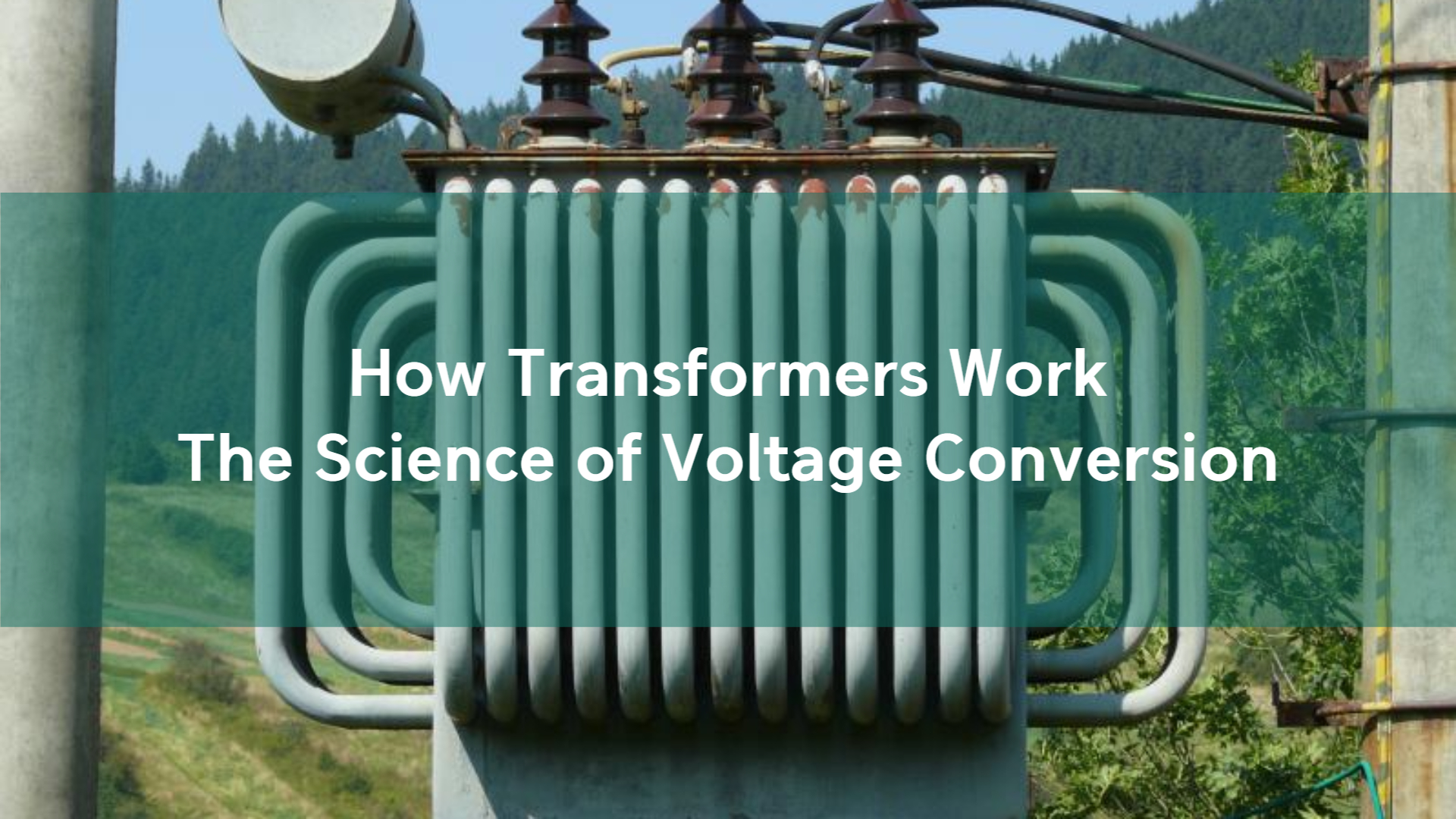
How Transformers Work: The Science of Voltage Conversion
The Unseen Backbone of Modern Power: How Transformers Work
In the intricate dance of electricity that powers our modern world, transformers are the unsung heroes. From the massive substations that distribute power across continents to the small adapters that charge your phone, these devices are fundamental. They are the silent conductors enabling the efficient transmission and flexible utilization of electrical energy. Understanding how transformers work is key to appreciating the robustness and adaptability of our electrical infrastructure, especially when adhering to stringent international standards like IEC 60076, KEPCO specifications, and IEEE C57.
The Fundamental Principle: Electromagnetic Induction
At its core, a transformer operates on the principle of electromagnetic induction, a phenomenon discovered by Michael Faraday in the 19th century. This principle states that a changing magnetic field can induce an electromotive force (EMF), or voltage, in a conductor. Transformers harness this fundamental law to change voltage levels without a significant loss of power.
Components of a Standard Transformer
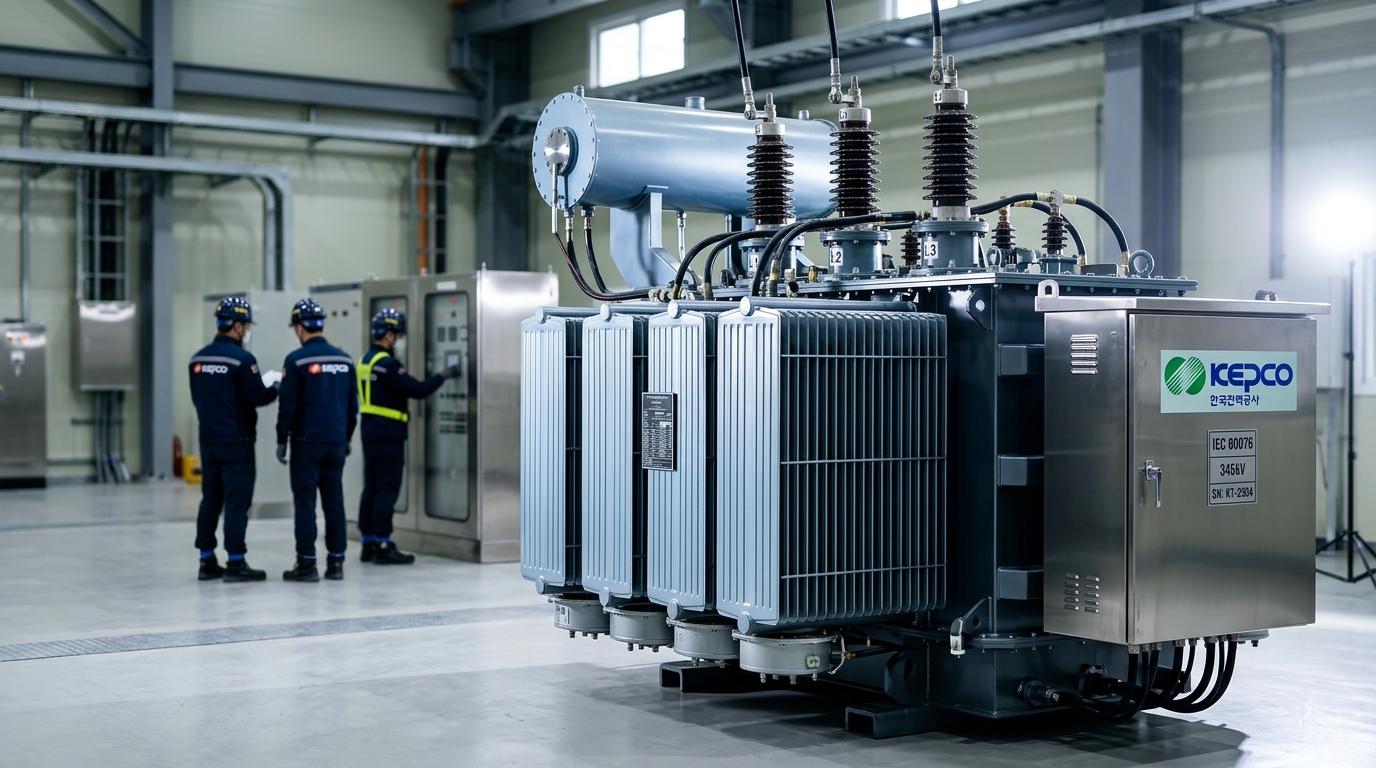
A typical power transformer, designed to handle substantial energy flows as per standards like IEC 60076, consists of several key components:
- The Core: This is usually made of laminated sheets of ferromagnetic material, most commonly silicon steel. Lamination is crucial to minimize energy losses due to eddy currents (circulating currents induced in the core). The core provides a path for the magnetic flux to link the two windings efficiently.
- Primary Winding: This is a coil of insulated wire wrapped around one section of the core. It is connected to the input AC voltage source.
- Secondary Winding: This is another coil of insulated wire, wrapped around a different section of the core (or sometimes concentrically around the primary). It is connected to the load, where the converted voltage is utilized.
- Insulation: High-quality insulation materials (like oil, paper, and specialized resins) are essential to prevent short circuits between windings and the core, especially in high-voltage applications compliant with IEEE C57.
- Cooling System: For larger transformers, cooling systems (such as oil circulation, radiators, and fans) are vital to dissipate the heat generated during operation and maintain optimal temperature, ensuring longevity and reliability as mandated by KEPCO standards for grid stability.
How Voltage Conversion Happens: The Turns Ratio
The magic of voltage conversion lies in the ratio of the number of turns in the primary winding to the number of turns in the secondary winding. Let's denote:
- $N_p$ = Number of turns in the primary winding
- $N_s$ = Number of turns in the secondary winding
- $V_p$ = Voltage applied to the primary winding
- $V_s$ = Voltage induced in the secondary winding
The fundamental relationship in an ideal transformer is given by the turns ratio:
$$ \frac{V_s}{V_p} = \frac{N_s}{N_p} $$
This simple equation reveals the core function:
- Step-Up Transformer: If the secondary winding has more turns than the primary ($N_s > N_p$), then the secondary voltage will be higher than the primary voltage ($V_s > V_p$). These are crucial for transmitting electricity over long distances efficiently, minimizing voltage drop and power loss.
- Step-Down Transformer: If the secondary winding has fewer turns than the primary ($N_s < N_p$), then the secondary voltage will be lower than the primary voltage ($V_s < V_p$). These are used in distribution networks to reduce high transmission voltages to safer, usable levels for homes and industries, and in countless electronic devices.
The Role of Alternating Current (AC)
It's vital to note that transformers only work with alternating current (AC). This is because electromagnetic induction requires a *changing* magnetic field. AC voltage naturally fluctuates, creating the necessary continuously varying magnetic flux in the core. A direct current (DC) produces a steady magnetic field, which, once established, does not induce a continuous voltage in the secondary winding. This is why AC is the standard for power grids worldwide.
Efficiency and Power Transfer
Real-world transformers are remarkably efficient, often exceeding 99%. This efficiency is a testament to careful design and material selection, adhering to international benchmarks. Power ($P$) is the product of voltage ($V$) and current ($I$). In an ideal transformer, power in equals power out ($P_p = P_s$), meaning:
$$ V_p imes I_p = V_s imes I_s $$
Rearranging this, we get the relationship for current:
$$ \frac{I_s}{I_p} = \frac{V_p}{V_s} = \frac{N_p}{N_s} $$
This inverse relationship between voltage and current is key. When a transformer steps up voltage, it steps down current proportionally, and vice versa. This allows for high voltage, low current transmission (minimizing resistive losses, $I^2R$) and then stepping down to lower voltage, higher current for end-use.
Losses in Transformers
While highly efficient, transformers do experience some energy losses:
- Core Losses (Iron Losses): These occur in the core material and consist of hysteresis losses (energy required to reorient magnetic domains) and eddy current losses (circulating currents induced by the changing magnetic flux). Laminated cores and specific steel alloys help minimize these.
- Copper Losses (Winding Losses): These are resistive losses ($I^2R$) that occur in the copper windings due to the current flowing through them. Using thicker wires and optimizing winding design reduces these losses.
- Stray Losses: Minor losses due to leakage flux and other factors.
Manufacturers rigorously test transformers to ensure these losses are within acceptable limits as defined by standards like IEC 60076 and IEEE C57, guaranteeing performance and energy conservation.
Applications and Importance in the Global Grid
The ability of transformers to efficiently convert voltage levels makes them indispensable across the entire power spectrum:
- Power Generation: Step-up transformers increase the voltage generated by power plants (e.g., from 25 kV to 765 kV) for efficient long-distance transmission.
- Transmission and Distribution: Networks of step-up and step-down transformers manage voltage levels at various stages, ensuring power reaches consumers safely and reliably.
- Industrial Use: Many industrial processes require specific, often high, voltages, necessitating transformers for precise voltage control.
- Commercial and Residential Use: Step-down transformers reduce high distribution voltages to standard household levels (e.g., 120V/240V in North America, 230V in Europe).
- Electronics: Small transformers in adapters and power supplies convert mains voltage to the low DC voltages required by electronic devices (though often followed by rectification and regulation).
For Korean power transformer manufacturers exporting globally, adherence to and understanding of international standards such as IEC 60076 (international), IEEE C57 (North America), and specific utility requirements like KEPCO (Korea Electric Power Corporation) for grid compatibility and reliability, is paramount. These standards dictate design, testing, material quality, and performance parameters, ensuring transformers function optimally and safely in diverse electrical grids.
Conclusion: The Indispensable Role of Transformers
Transformers are elegant solutions to a fundamental challenge in electrical engineering: the need to efficiently transmit power over vast distances and then safely utilize it at various voltage levels. By leveraging the principle of electromagnetic induction and the precise relationship governed by winding turns, these devices facilitate the flow of electricity that underpins our interconnected world. As global demand for reliable and efficient power grows, the science behind transformers remains as critical as ever, driving innovation in materials, design, and efficiency to meet the evolving needs of the power industry worldwide.
Recommended Products
Discover related products from our store
Read Next
Continue reading related articles curated for you.